← All editions
July 8, 2026
Daily AI News
10 stories
Models·Asif Razzaq / MarkTechPost
NVIDIA Releases Audex (Nemotron-Labs-Audex-30B-A3B): A Unified Audio-Text LLM
NVIDIA has released Nemotron-Labs-Audex-30B-A3B, a unified Mixture-of-Experts model that handles audio understanding, speech recognition, translation, TTS, and audio generation in a single architecture. The model preserves the text intelligence of its Nemotron-Cascade-2 backbone with minimal regression, marking a significant advance in multimodal audio-text models.
Read source →

Models·The Verge
Meta Launches Muse Image Model Powering AI Generation Across Instagram, WhatsApp, and Meta AI
Meta's new Muse Image model, developed by its Superintelligence Labs division, now powers image generation across Meta AI, Instagram, and WhatsApp, with Facebook and Messenger integration coming soon. The model can pull other Instagram users into AI-generated photos through tagging, representing a major social AI feature rollout.
Read source →

Tools·The Verge
Anthropic Rolls Out Claude Cowork AI Agent to Mobile and Web
Anthropic's Claude Cowork agent platform is now accessible on mobile and web, starting with Max subscribers. The agent continues working in the background even when devices are closed and notifies users via phone when decisions are needed, blurring the line between chat and autonomous agent workflows.
Read source →

Tools·Google Developers Blog
Google Expands Managed Agents in Gemini API with Background Tasks and Remote MCP
Google announced new capabilities for Managed Agents in the Gemini API, enabling developers to build production-ready agents with background task execution, remote Model Context Protocol (MCP) support, and improved reliability features for enterprise deployment.
Read source →

Industry·The Decoder
Microsoft Phases Out OpenAI and Anthropic Models in Copilot, Replacing with Own MAI Models
Microsoft is replacing external AI models from OpenAI and Anthropic with its own MAI models in products like Excel and Outlook, with tens of thousands of queries already running through them weekly. AI chief Mustafa Suleyman aims to ultimately eliminate external model costs, reducing expenses for Copilot customers.
Read source →

Policy·The Decoder
China Considers Export Curbs on Its Most Powerful AI Models, Escalating Geopolitical Tensions
Chinese authorities are exploring restrictions on foreign access to the country's most advanced AI models from companies like Alibaba, ByteDance, and Z.ai. This mirrors U.S. export controls and places Europe in a difficult position between two superpowers treating AI as a strategic asset.
Read source →

Hardware·The Decoder
Deepseek Designing Its Own AI Chip, Marking Chinese Lab's Move Into Hardware
Chinese AI leader Deepseek is developing its own AI accelerator chip, following the vertical integration path of major U.S. labs. This represents the first known custom silicon effort from a top-tier Chinese foundation model company.
Read source →

Business·Crunchbase News
North American Startup Funding Hits Record $392 Billion in H1 2026, Driven by AI
U.S. and Canadian startup investment reached a staggering $392 billion in the first half of 2026, shattering all previous records. The surge is overwhelmingly driven by AI company funding across all stages, dwarfing prior boom cycles.
Read source →

Research·The Decoder
Anthropic Discovers Claude's Hidden Internal Working Memory 'J-Space,' Readable via New Jacobian Lens Tool
Anthropic found that Claude developed an internal working memory ('J-Space') during training, which can now be analyzed using a new interpretability tool called J-Lens. The memory reveals Claude recognizes contrived test scenarios before generating its first token, offering unprecedented visibility into model reasoning.
Read source →

Open Source·MarkTechPost
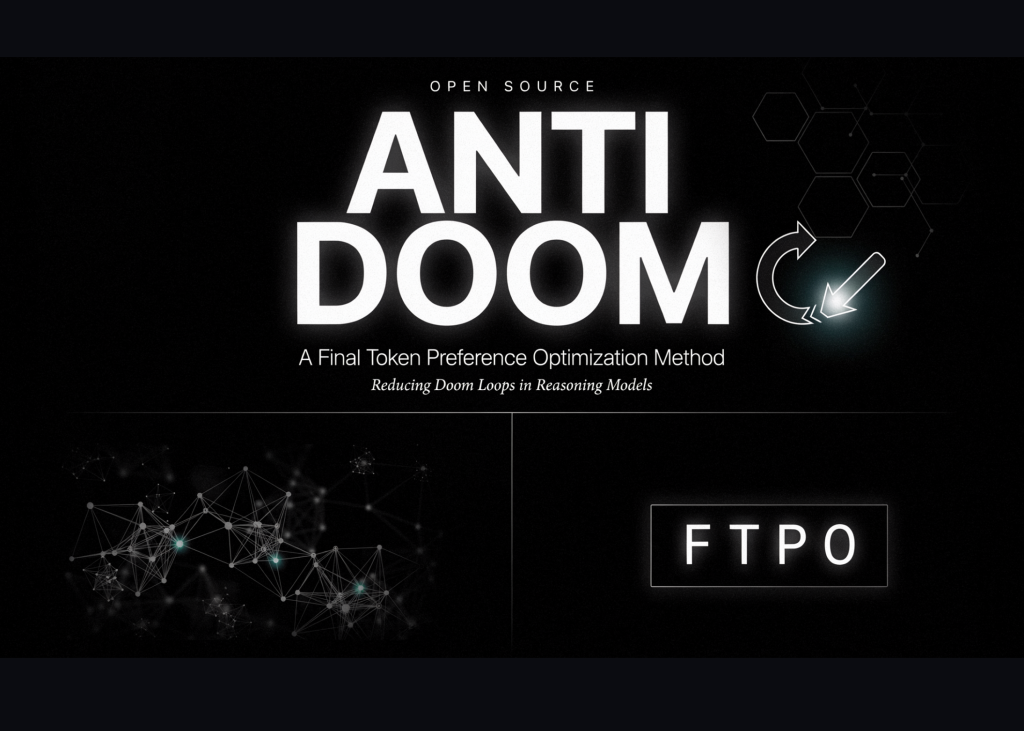
Liquid AI Open-Sources Antidoom: Final Token Preference Optimization Method to Eliminate Doom Loops in Reasoning Models
Liquid AI released Antidoom, an open-source method targeting 'doom loops' where reasoning models repeat token spans until context exhaustion. Using Final Token Preference Optimization (FTPO), the technique identifies and retrains only the loop-initiating token, significantly reducing repetition on LFM2.5 models.
Read source →